
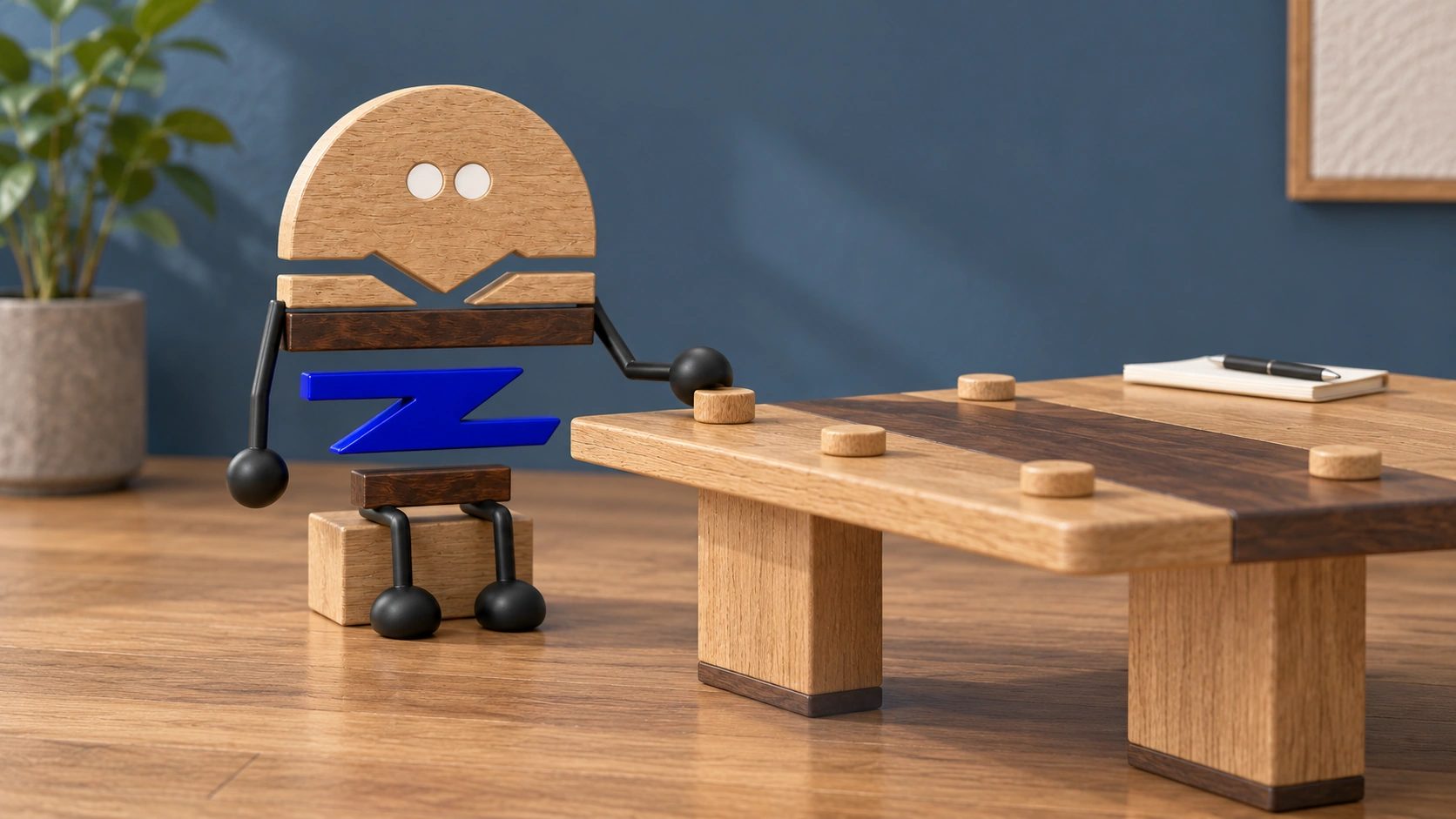
Adjusting leg positions along a table changes the relationship between support and people. Coordinate the permitted adjustments with seating, stability, cabling and reassembly rules.
The number of participants may remain the same while the seating arrangement changes: everyday discussions run along both sides, remote meetings face a screen, and training requires people to turn. The top stays the same, but the legs may become a conflict during use. Begin a leg-position decision with the relationship between support and people.
Steelcase's official Tessel page describes a system with leg positions adjustable along the table length. This is a configuration adjustment along the table, with its operating arrangements defined by the product. Comparing two layouts shows why permitted configurations, supports, cabling and handover records need to work together.
Meichun observations · 01
Assess usable seats through the actions they need.
Evenly spaced chairs create a neat plan, yet may not correspond to actual use. Knees, feet, approaching the table, leaving the seat and turning all need space. A table leg within those movements can turn a nominal seat into a position that is difficult to use.
For example, if a room needs to choose a principal layout between a six-person conversation and four people facing a screen, draw participants' directions and movement areas first, then overlay the legs. The differences between those plans reveal the adjustment needed. Configure the support to serve the people using it.
Include the chairs in the review. Their arms, bases and pull-out distances may change how people approach the table. Establish the usable number of seats and their spacing with the selected product, activities and site conditions.
Meichun observations · 02
Define a map of permitted leg positions.
Changing leg positions may affect support spans, end overhangs, connections and the relationship with the top. Product information should identify permitted positions, the adjustment procedure, locking requirements and the person responsible for checks. Use that information to define the supported configurations.
Divide the positions into confirmed configurations, changes for further discussion and areas outside the permitted range. A clear boundary makes flexibility practical. Identify any need for specialist personnel, tools or fixtures during selection.
Distinguish installation configuration from everyday operation. Some changes take place only during installation. Explain who makes each adjustment and the instructions they follow so a flexible system has a clear operating process.
Meichun observations · 03
Coordinate cabling whenever leg positions change.
Cable channels, fixing clips or equipment routes may sit close to supports. After a move, a previously clear connection can become taut, obstructed or exposed. Review the relationships beneath the table even when the tabletop connection box stays in place.
Choose two permitted positions and compare the same connection arrangement in each: where cables enter and are fixed, whether they cross users' movements, and whether maintenance access remains available. Record the results as part of a configuration ready for handover.
Review electrical and equipment arrangements against the specific product and project requirements. Coordinate the cable route and leg-position change with the specialist systems' connection rules.
Meichun observations · 04
Record a configuration the next service team can restore.
When the site configuration is complete, record the top version, support quantity and positions, seats and cable route together. This allows a later team to restore the meeting room and investigate any issue connected with reconfiguration.
The record can be simple, provided it is checkable. Drawings, configuration schedules, installation instructions and site labels should refer to the same version, showing what remains and what changes. Clear records carry the configuration beyond the installer's memory.
Manufacturing also needs to review connector consistency, repeated assembly requirements and how incorrect assembly is identified. Assign the related verification scope and methods to the responsible team as part of the configuration record.
Installation handover can include both a permitted-configuration plan and an as-installed plan. The first shows the available choices; the second records the one used for this project. Refer to both before later reconfiguration so the installed position remains distinct from the wider permitted range.
Meichun observations · 05
Include fixed leg positions in the same comparison.
When layouts remain unchanged, equipment is simple and site maintenance resources are limited, a fixed arrangement matched to the seats may be easier to operate. The additional connections, documents and checks of an adjustable system should serve an actual use requirement.
List daily use, installation, reconfiguration and maintenance separately. Where a project never reconfigures, the adjustment range may be a secondary consideration. Where change is required, match it to the product's permitted configurations and the available service resources.
Leg configuration keeps support, seating and connections coordinated across different settings. The result should be a specific arrangement that others can check, with clear instructions for the adjustments needed to put it into use.
PRACTICAL CHECKLIST
Bring these questions to the table.
Use these points to discuss product selection, configurations and the requirements of your project.
- 01Usable seats
Check the actual chairs, sitting positions, approaches and movements when leaving.
- 02Permitted positions
Obtain the structural range, locking requirements and adjustment responsibilities.
- 03Coordinated cabling
Check connections and maintenance routes at every permitted leg position.
- 04Configuration record
Record a final version that can be restored, including its actual positions.
Official brand product information informs the discussion of office furniture and space. Meichun perspectives and manufacturing notes express our views on products and making.
Original illustrations use the Meichun logo character and furniture to introduce product, component and spatial relationships.
- Steelcase / Orangebox|Tessel|Flexible Table System
The official information introduces adjustment along the table length and modular configurations, providing a starting point for discussing leg positions and seating relationships.
View official source ↗ - Meichun|Meichun observations on selection and manufacturing · 2026-10-04
Meichun shares perspectives on selection and configuration through use scenarios, product relationships and manufacturing methods. Original illustrations introduce the arrangement of furniture, components and space.