
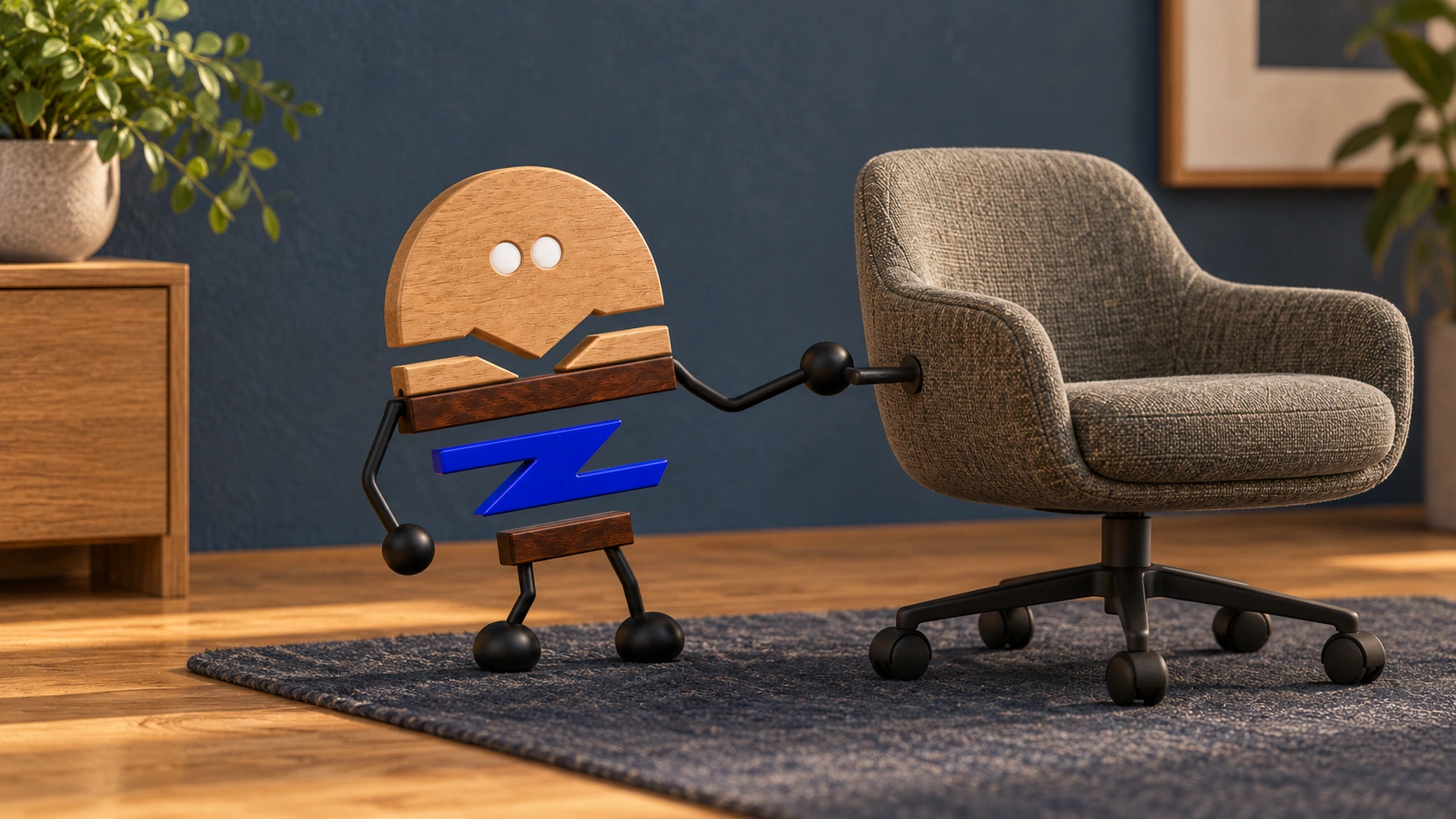
Concealed castors keep the form clean, but selection also involves the floor, the route, where the chair stops and who moves it. Plan the whole journey, from one conversation to the next.
The need to move lounge seating often comes from a changing room. Two people may have a short conversation in the morning, a group may sit together in the afternoon, and furniture may need to be moved for cleaning. The operators, routes and parking arrangements differ for each activity. Treating mobility as a separate selling point can overlook how the furniture is used after it moves.
This article explores how to select concealed mobility structures. DARRAN's official product index provides a starting point for looking at lounge furniture. The discussion then follows pushing, turning and parking as part of project planning, with operating arrangements tied to the selected product and its instructions.
Meichun observations · 01
Establish who moves the chair and how often.
A lounge chair repositioned by users every day needs an intuitive operation. Furniture moved only for cleaning may be handled by designated maintenance staff following instructions. The two situations may call for different structures. Describe the frequency and responsible people first, then choose the means of movement that fits the actual need.
If a reception room switches between face-to-face conversation and group discussion, draw both final arrangements and mark the pieces that actually need to move. Keeping some seats fixed as spatial anchors while others accommodate change can be easier to manage than making every piece movable. The division of roles should follow the room's activities.
Meichun observations · 02
Follow the full route to understand ease of movement.
Movement includes pulling a chair out of its original position, changing its direction, passing narrow spaces, reaching a new position and returning it. Adequate room area does not guarantee clearance at every turn. Include the upholstered outline, arms and backrest when checking the route, rather than measuring only the base.
When reviewing a sample, choose the most difficult part of the project route: pulling a chair out beside a sofa, moving around a coffee table and joining another seating group, for example. Observe whether the operator repeatedly lifts it, changes grip or needs help, and whether it touches table edges or cabinet fronts. This complete sequence reveals more about the route than pushing a chair back and forth in an open showroom.
Pay particular attention to the grip. Continuous upholstery may offer no obvious operating point, leading users to push on the top of the backrest, a decorative piece or the outer covering. The product should identify the correct operating point, and the layout should keep it accessible. Concealing the castors needs to work together with clear operating information.
Meichun observations · 03
Check the castors on the floors they will encounter.
Hard floors, carpet, joints and thresholds may change pushing resistance, turning and noise. Include the project conditions when evaluating how smoothly a chair moves. Use the floor types permitted for the selected product and assess them in actual or representative conditions; similar-looking castors can behave differently.
A route may cross carpet edges, freshly cleaned floors or cable protection. The project and product teams should establish whether and how these transitions can be crossed. Record the permitted route and floor conditions so that the proposed layout reflects where movement is practical.
Meichun observations · 04
Make the parked state clear to the user.
Some structures divide functions between fixed feet and castors; others require locking or another action to return to use. Follow the operating sequence for the selected design. Concealed castors and locking components need a clearly identifiable state so users know what to do and when the chair is ready.
Frame the trial as moving the chair to its new position and restoring it for use according to the instructions. Observe whether completion is easy to identify and whether the operator must check direction, ground contact or locking. Review stability and safety through the product's specified verification process as part of this sequence.
Check the resulting arrangement against circulation and other furniture as well. A chair that stays in place may still block a cabinet door, the space to leave a meeting table or a daily walking route. Movement adds usable flexibility when it is coordinated with a clear parking arrangement.
Meichun observations · 05
Compare fixed and mobile options through the whole activity.
A fixed option may reduce repositioning and incorrect operation, while a mobile option may support more activities and introduce requirements for flooring, instructions and maintenance. In narrow waiting areas, near circulation routes or where seating must retain its orientation, a clearly defined fixed arrangement may be more useful than frequent movement.
Compare both options using the same set of activities: how they work in the original position, the actions needed to adjust them, checks after adjustment, and the ease of cleaning and maintenance. Assess flexibility through the complete activity and the demands of the space.
Assign responsibility for returning the furniture to place. When users adjust it frequently, product information and layout should make the process clear. When only cleaning staff move it, include the operation in maintenance instructions. Aim for correct movement when change is needed, followed by a clear and complete seating arrangement for the next conversation.
PRACTICAL CHECKLIST
Bring these questions to the table.
Use these points to discuss product selection, configurations and the requirements of your project.
- 01Frequency of adjustment
Distinguish daily rearrangement from occasional cleaning and identify who moves the furniture.
- 02Actual flooring
Include the project carpet, joints, thresholds and turns in the trial, alongside the showroom demonstration.
- 03Operating point
Make sure users can identify where to grip and push without guessing from upholstery or decorative pieces.
- 04Parked state
Check the fixed, locked or returned position and the checks required before use.
Official brand product information informs the discussion of office furniture and space. Meichun perspectives and manufacturing notes express our views on products and making.
Original illustrations use the Meichun logo character and furniture to introduce product, component and spatial relationships.
- DARRAN|Official product index
The official index provides a starting point for observing lounge furniture. Meichun develops the discussion of pushing, turning and parking into a project selection framework.
View official source ↗ - Meichun|Meichun observations on selection and manufacturing · 2026-10-04
Meichun shares perspectives on selection and configuration through use scenarios, product relationships and manufacturing methods. Original illustrations introduce the arrangement of furniture, components and space.