
A guest-chair family needs to suit waiting, brief conversations and meetings. Its shared identity should carry through configurations, movement, cleaning and replacement rules, not simply a row of matching colours.
Identical-looking guest chairs arranged together readily suggest a family. Real use differs: a short wait, writing, a longer meeting and movement for cleaning involve different actions. Armrests or no armrests, different bases and different finishes should not be treated as identical configurations merely because they share a series name.
Allseating's official L1 Guest page offers a case for observing configuration changes within a family. This article connects a shared identity with activities, part identification and later additions, exploring visual language alongside different arrangements for use.
Meichun observation · 01
Classify by activity, not by the word guest.
Waiting may mainly involve sitting briefly and setting down belongings; a short conversation may involve turning; writing needs a relationship with a table; a longer meeting has another duration. Describe each area's main activities before deciding which positions can share one configuration.
Suppose a reception area serves both waiting and consultation. Compare a uniform configuration with a small number of variations, observing changes in use, footprint and management. Consider seating, tables and belongings together to give waiting, brief discussions and meetings their own positions.
Length of stay is one dimension, not a selection formula on its own. Users, tables, belongings and activity transitions also belong in the discussion. Do not simply assign one chair to long sitting and another to short sitting.
Meichun observation · 02
What stays visually consistent, and what may vary?
Armrests, no armrests, changes in base or finish may alter footprint, connections and operation. A family record should state what stays and what changes rather than leave purchasing with only the family name.
Small changes may also affect packaging, parts and later additions. Record connections and configurations for different versions so packaging, replacement and installation remain clearly matched.
A clear family does not flatten its differences; it provides understandable choices for different activities. The design language can remain consistent while applicability and part identity stay individually accurate.
When areas use different configurations, retain the reasons in the records. A writing position, for example, needs a table relationship checked, while a waiting position mainly needs entry and belongings reviewed. Even with a shared form, they should not be unintentionally exchanged in later purchasing. A family is valuable not for removing every difference, but for making differences understandable and manageable.
Meichun observation · 03
Confirm movement and storage separately.
Daily movement, occasional cleaning and temporary centralised storage create different demands for staff and routes. Discussing them only after delivery may leave no suitable home position or force them into everyday passageways.
Include the chair's movement method, stacking quantity and storage position in the configuration instructions so routine return and temporary centralised storage each have an arrangement.
Sample comparisons can include moving from the use position to the planned storage position and restoring it according to instructions. Observe use, storage and return routes to plan handling and cleaning movements.
Meichun observation · 04
Look at junctions and different surfaces when planning cleaning.
Where the back, seat and armrests meet affects debris removal and hand access. Initial swatches show appearance; samples should also be viewed from the side, rear and joints to include routine maintenance in selection.
Different surfaces may need different cleaning methods. One method will not necessarily suit every fabric, coating or timber surface. Routine cleaning, damage repair and the replacement of individual parts need to be considered separately.
If later re-covering or part replacement is desired, identify the replaceable object, permitted connections and spare-part relationships. Removability and reliable future supply are separate matters, depending on physical structure and version-specific supply information respectively. They should not be combined into one maintenance selling point.
Meichun observation · 05
For later orders, compare configurations before colours.
New and existing items may share a name while methods and versions change. Link the original delivery record to models, configurations, finishes and areas to give later purchases an accurate starting point. Keep the records with the corresponding items to support continuity in colour and use.
Natural grain, gloss and signs of use each contribute surface characteristics and can be recorded together in a comparison. If a project needs to continue a particular relationship, discuss it specifically with accurate material information and physical samples.
Record different configurations in one family separately as well. Later, a manager needs to know why one area uses no armrests and which version another area uses. This reduces accidental changes to the original conditions of use when adding pieces.
Meichun observation · 06
A clear family of products is easier to manage.
The adopted record can include each area's configuration identity, reason for use, operating requirements and maintenance information. It need not be complicated, but should tell the next purchaser or maintenance person what they are dealing with.
A guest-chair family maintains a clear design language while supporting different activities. Visual consistency is one outcome and should not exclude reasonable variations. Differences in seat forms, supports and maintenance respond to different patterns of staying and conversation.
PRACTICAL CHECKLIST
Bring these questions to the table.
Use these points to discuss product selection, configurations and the requirements of your project.
- 01Activities in use
Record waiting, brief conversation, writing and meetings separately rather than letting one category name cover every situation.
- 02Configuration identity
Do changes to armrests, bases and finishes correspond to clear versions and part relationships?
- 03Movement and return
Arrange handling and stacking according to the specific product instructions, recording return positions alongside everyday cleaning routes.
- 04Records for later additions
Record configurations, finishes and the parts that can be replaced individually, so later purchases and maintenance refer to the correct version.
Official brand product information informs the discussion of office furniture and space. Meichun perspectives and manufacturing notes express our views on products and making.
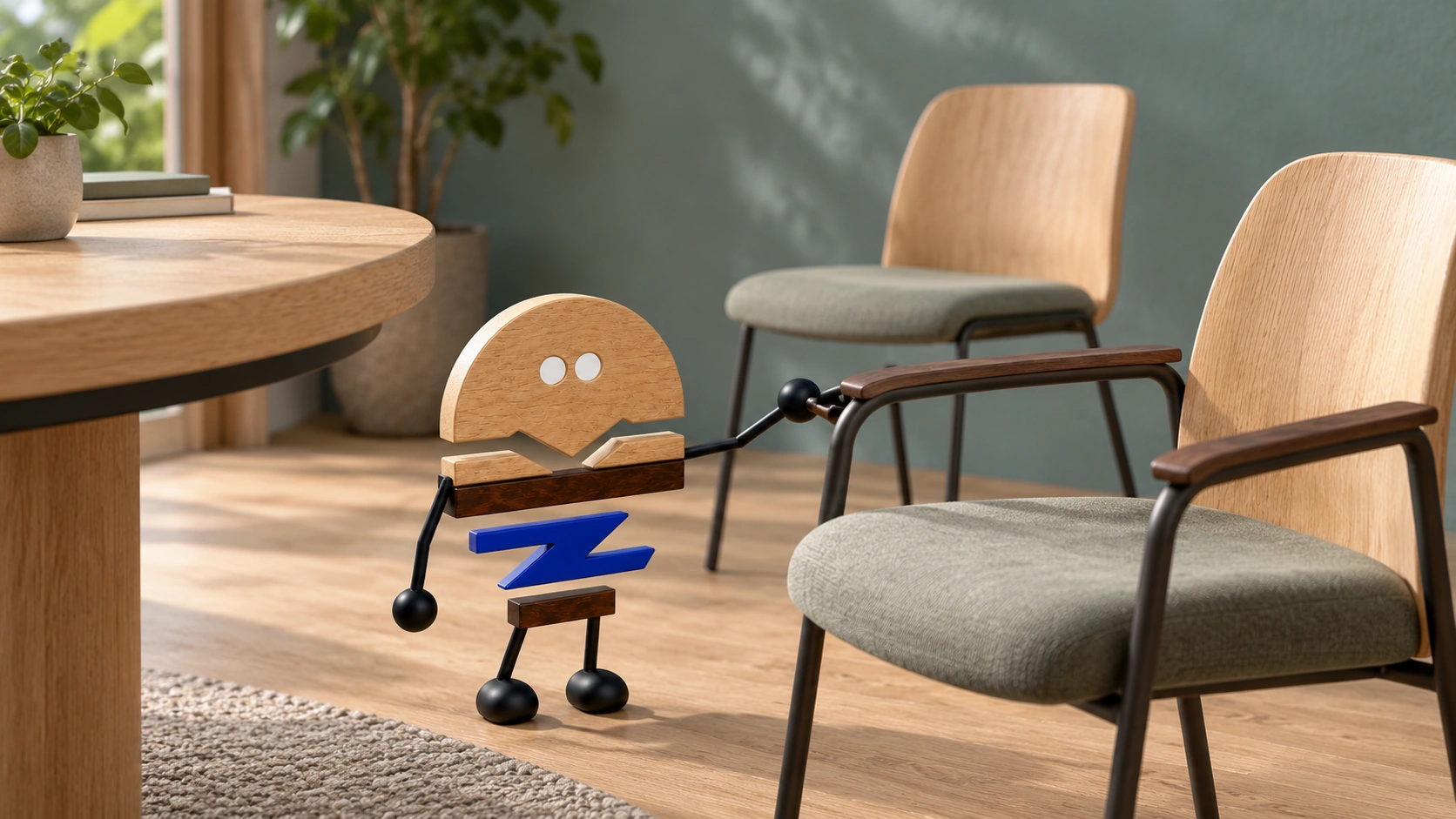
Original illustrations use the Meichun logo character and furniture to introduce product, component and spatial relationships.
- Allseating|L1 Guest
The official guest-chair family provides a starting point for observing configurations. Duration of use, cleaning, versions and later additions are Meichun's extended observations on seating use.
View official source ↗ - Meichun|Meichun perspectives on selection and manufacturing · 2026-10-04
Meichun shares perspectives on selection and configuration through use scenarios, product relationships and manufacturing methods. Original illustrations introduce the arrangement of furniture, components and space.